Training and skills
One trainer, thirty learners, and the same question thirty times.
Every training environment has the same bottleneck: the person who knows the answer can only be in one place. FieldPal answers the routine questions out loud, so expert time goes to the ones that actually need it.
The bottleneck
Expert attention doesn't scale, and it is the whole product
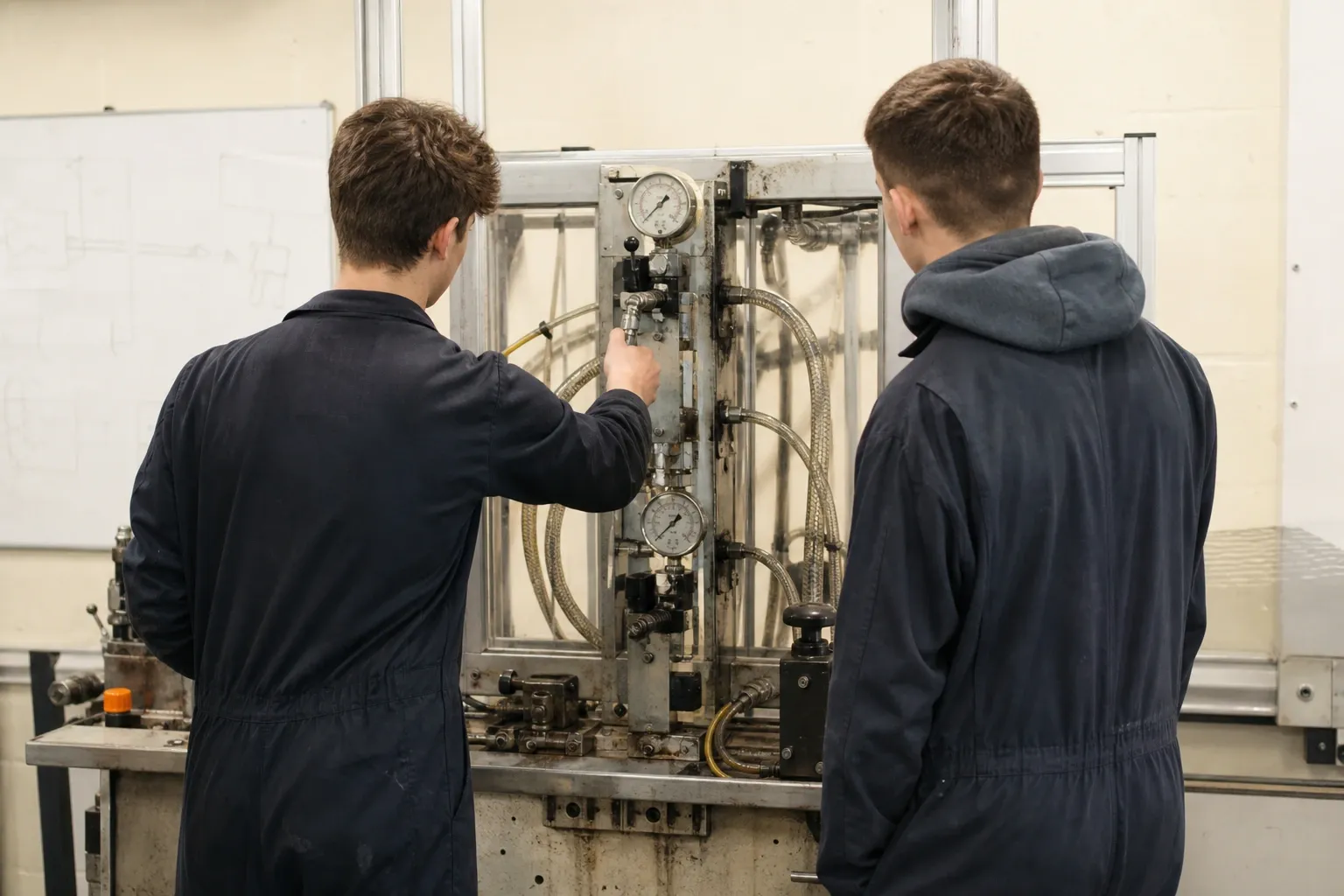
A workshop of learners generates questions faster than any instructor can answer them. Most are routine (which tool, which sequence, what the reading should be), but the learner can't tell a routine question from an important one, which is precisely why they are learning.
So they queue. Or they guess. Or they ask the person next to them, who is also learning, and a misunderstanding gets passed along as fact.
Meanwhile the instructor spends the session answering the same thing repeatedly instead of teaching the parts that need a person.
What changes
The routine questions answer themselves
-
Consistent answers
Every learner gets the same answer, from the same approved material, rather than whichever version the nearest available person happens to remember.
-
Asked without embarrassment
Plenty of learners won't put a hand up in front of a group. Asking out loud, privately, removes a barrier that has nothing to do with ability.
-
Grounded in your material
Answers come from the manuals, standards and procedures your programme actually teaches, not from a general model, and each one says which document it came from.
-
Available to everyone at once
Thirty learners can ask simultaneously. The instructor is freed for the questions that genuinely need judgement and a demonstration.
-
Accessible by voice
A learner who finds a dense written manual hard going can ask a question and be answered aloud. For some that is the difference between keeping up and falling behind.
-
Evidence of what was done
Learners describe the task as they complete it and the structured record is built from what they said, which is assessment evidence without a separate write-up.
What it looks like
The expert narrates the job rather than writing it up afterwards

Why it is industry-agnostic
The mechanism doesn't care what the equipment is
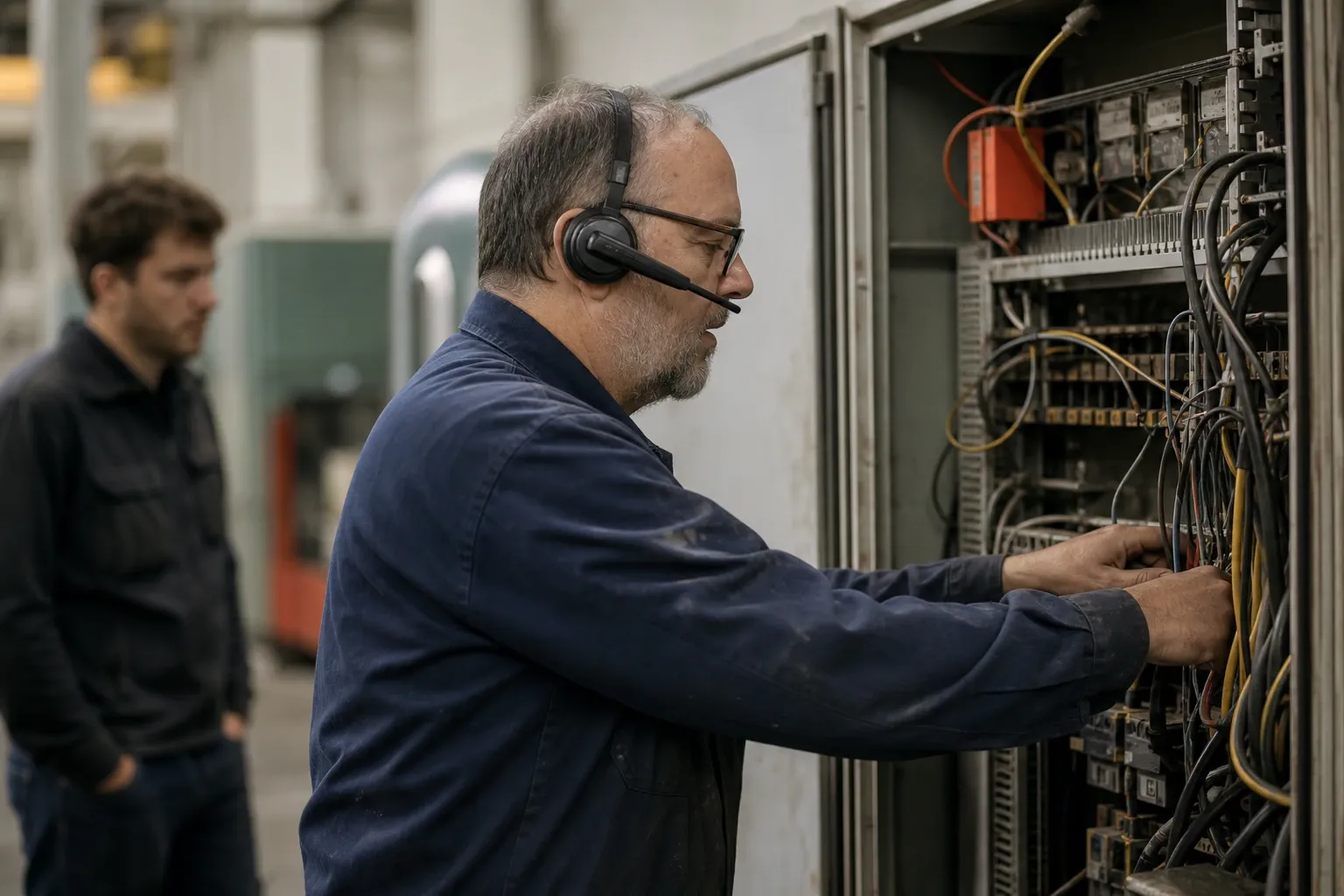
A training programme is a body of approved material, a cohort of people learning it, and too few experts to go round. That shape is identical whether the subject is vehicle diagnostics, plant maintenance, electrical installation or process operation.
FieldPal is pointed at whatever material the programme teaches from. Nothing about it is specific to a sector, which is why the same deployment works across a college running several disciplines at once.
It is also the same product the learner will meet in employment. Training on the tool the industry uses isn't a side effect worth ignoring.
How programmes start
A cohort, not a curriculum rewrite
No content has to be authored. The material a programme already teaches from is the material FieldPal answers from.
-
01
Load the course material
Manuals, standards, procedures and the manufacturer documentation the programme already uses. Nothing needs rewriting for the tool.
-
02
Run one cohort
A single group uses it through a term while instructors watch which questions stop reaching them, and which still should.
-
03
Extend across disciplines
The same deployment serves another subject by pointing it at that subject's material. Adding a discipline isn't another project.
Who this is for
Where it fits
- Further education colleges running technical and vocational programmes
- Apprenticeship schemes where learners are on site more than in a classroom
- Employer training academies bringing new technicians up to competence
- Programmes supporting learners who find dense written material a barrier
- Anywhere a small number of experienced people are the constraint on intake
Get the app
On whatever the learners already carry
Android and iPhone, plus RealWear head-mounted devices for practical sessions at a rig or on a vehicle.
Questions
What colleges and training providers ask
- Who owns the course material we load?
- You do. It stays inside your deployment, isn't used to train models serving anyone else, and it's returned or deleted at your election if you stop being a customer.
- What does it cost for a college or training provider?
- It's licensed per user per month, with a lower rate for larger cohorts. There's a two-week free trial, so you can load one programme's material and try it with a group before committing.
Start with one cohort
Give us the material a single programme teaches from. We'll put it in front of a group and let the instructors tell us which questions stopped arriving.