Heavy equipment
The manual exists. It is just in the wrong language, on the wrong continent, for the wrong machine variant.
Equipment sold over decades is serviced by a dealer network you don't directly control, often in remote conditions with unreliable connectivity. FieldPal puts the right guidance in the technician's hands and their own language.
The reality
The manufacturer doesn't do the repairs
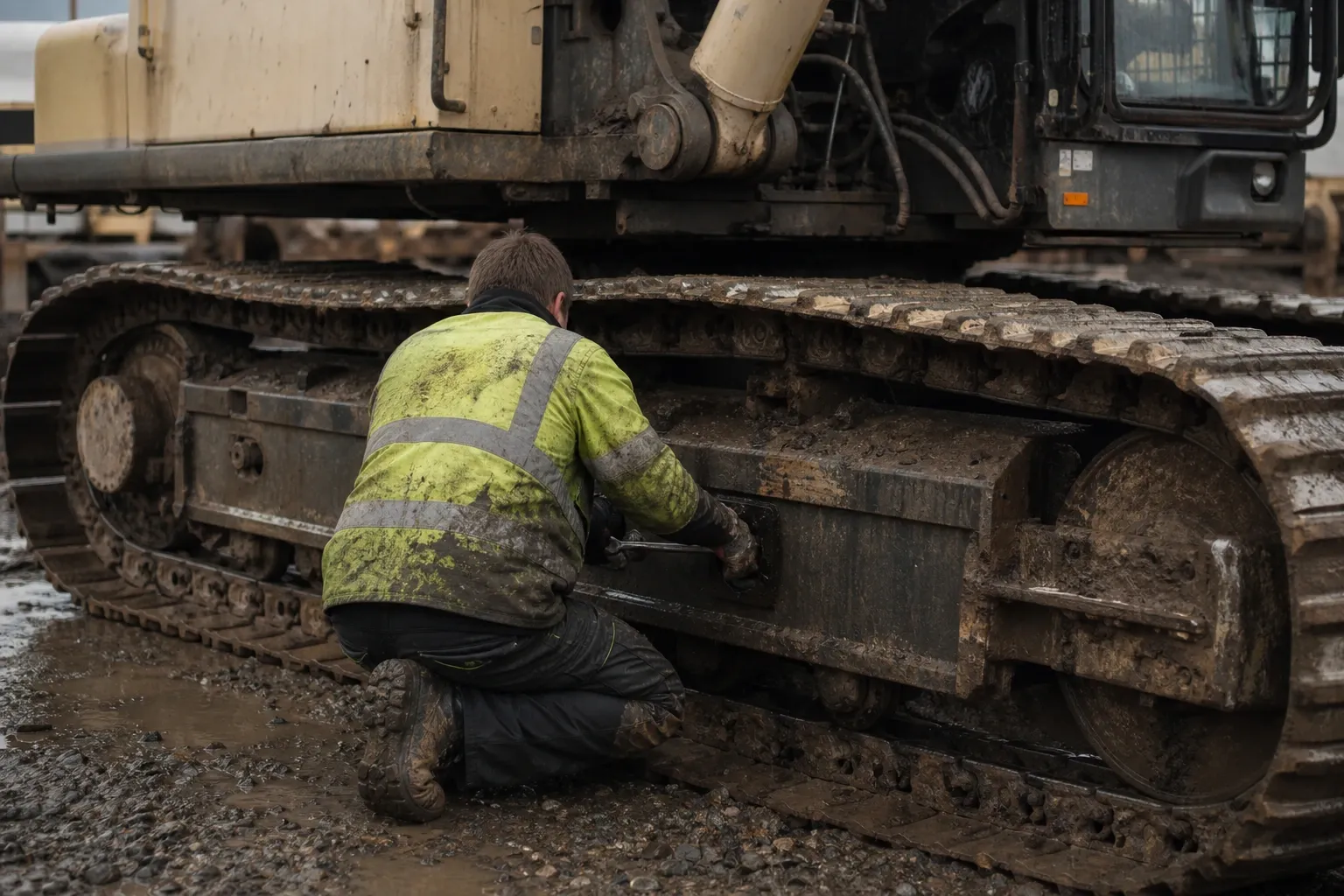
For most equipment makers, maintenance is carried out by dealers and field engineers, often in remote, hazardous or extreme environments, and often by technicians who don't speak the language the documentation was written in.
Thousands of repair manuals exist across dozens of languages, but they are fragmented, inconsistently translated, and often difficult to locate. The information exists. It is simply not where or when the frontline technician needs it.
Consider a machine that fails a mile underground on a mining project. The technician on site may not speak English. Network access is intermittent. The correct repair manual exists somewhere, but not in their language, not indexed for that specific machine configuration, and not accessible in the moment.
What changes
From a document library to an answer
-
Ask in any language
Technicians ask in their own language and get an answer in it, even where the source manual was only ever published in one. Translation stops being a project with a budget.
-
Indexed by configuration
Guidance is matched to the specific machine variant in front of the technician, not the product family in general.
-
Answers, not search results
You get a direct answer that cites the document behind it, rather than a list of PDFs to open on a phone under a machine.
-
The record comes back
What the dealer network learns feeds structured records back to you: the failure data your engineering teams currently never see.
-
Dealer-scale rollout
Onboarding is centralised for the manufacturer, then rollout and training are distributed across the dealer network.
-
Hands stay on the machine
It runs on RealWear head-mounted devices as well as phones and tablets.
Getting started
How an OEM onboards
-
01
Ingest and structure
Historical and current manuals, service bulletins and technical data are ingested and structured, including the inconsistent and partially translated material.
-
02
Translate and index
Content is indexed for instant multi-language access. For most manufacturers this alone produces measurable savings against existing translation and support costs.
-
03
Roll out to the network
Onboarding is centralised for the manufacturer, then deployment and training are distributed across dealers worldwide.
Questions
What OEMs and dealer networks ask
- Our dealers often work with poor or no connectivity. Does that matter?
- Partly. Dealer technicians can record voice notes and video with no coverage, and they process once the device reconnects. Answers and form completion still need a connection for now, so tell us early if poor coverage is normal across your network.
- Who owns our manuals once they have been ingested?
- You do. Your manuals stay inside your own deployment and aren't used to train models serving anyone else, and if you stop being a customer it's returned or deleted at your election.
- How is a dealer network rollout priced?
- Per user per month, with volume discounts, bought direct or through a partner. Deeper integration and larger training programmes are priced separately rather than hidden inside the licence.
Start with one machine family
Give us the manuals and bulletins for a single product line. We'll show your dealer technicians getting answers from it, in their own language.