FieldPal Find
The answer is already in your documentation. It just isn't reachable with both hands full.
Find turns the manuals, service bulletins and repair history you already own into something a technician can simply ask, out loud, at the asset, in their own language.
The problem
You don't have a documentation problem. You have a retrieval problem.
Most organisations we meet aren't missing information. They have decades of it: manuals across dozens of languages, service bulletins that supersede each other, troubleshooting trees, and years of completed jobs sitting in a service system.
What they don't have is a way to get the right piece of it to the right person at the moment it is needed. The material is fragmented, inconsistently translated, and often impossible to locate, and nobody searches a 400-page PDF on a phone while under a machine.
So the technician does the rational thing. They ring the one person who knows. That person becomes a bottleneck, and when they retire, the knowledge leaves with them.
What Find does
Ask like you would ask a colleague
-
Spoken questions
It's natural language, not search syntax. There is no keyword to guess, no document to locate first, and no need to know which manual covers it.
-
Sourced answers
Every answer names the document it came from, so a technician can verify it and an auditor can trace it.
-
Scoped to the asset
Indexed by model, variant and configuration, so the answer applies to the machine in front of them rather than the product line in general.
-
Any language, either direction
Ask in the language the technician speaks, from a document written in another. Manuals in Portuguese and fitters who speak Polish isn't a translation project, it is Tuesday.
-
Your own history
Not just the manufacturer's manual: what your own network has already learned about this fault, across every job you have completed.
-
Hands stay put
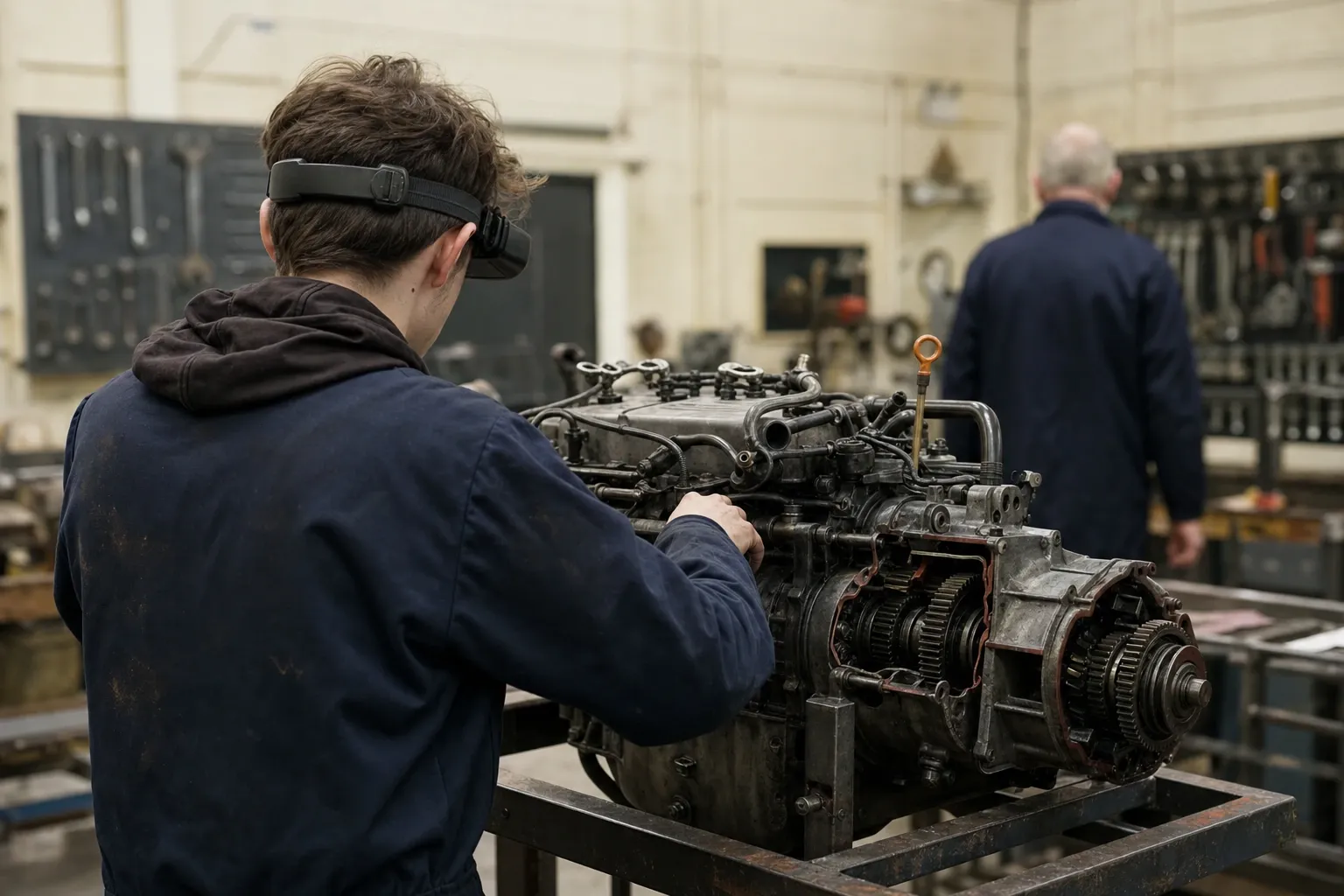
It runs on RealWear head-mounted devices as well as phones and tablets, so asking a question doesn't mean stopping the work.
What happens when you ask
A question, four steps, and a source you can check
01
A question, out loud
Natural language, not search syntax. No keyword to guess and no manual to locate first.
02
Scoped to this asset
Narrowed by model, variant and configuration, so the answer is about the machine in front of them.
03
Read from your material
Your manuals, your bulletins, your completed jobs, not a general model’s recollection of the product class.
04
An answer that names its source
So the technician can check it, and an auditor can follow it back to the page.
Why not a general assistant
Plausible isn't the same as correct
Ask a general-purpose model a specific technical question and it will produce a confident answer drawn from everything it has ever read about that class of equipment. Sometimes that is right. Sometimes it is right about a different variant.
In a safety-critical or warranty-bearing context, that distinction is the whole job. Find answers from your approved material and shows its source, so the technician can check it and your compliance position holds.
Language
The manual is in the wrong language, and nobody is going to translate it
This is one of the most common shapes the problem takes, and one of the least discussed. Equipment is bought globally and serviced locally, so documentation arrives in the manufacturer's language and the people using it speak something else.
The usual answers are both bad. Translating a manual estate is a project with a budget, a start date, and a version-control problem the moment the manufacturer issues a revision. Leaving it untranslated means the people closest to the machine can't read the thing that explains it.
Find translates at the point of the question. Ask in Polish of a manual written in Portuguese and the answer comes back in Polish, drawn from the Portuguese document and citing it. Nothing is translated in advance, so nothing goes stale when the manufacturer revises it, and adding a language isn't a procurement exercise.
Worked example
A Portuguese manual, a Polish fitter, and no translation project
What you have
A mismatch nobody is going to fix
- The manual was written in Portuguese
- The fitter on the job speaks Polish
- The manufacturer revises it twice a year
At the moment of the question
Asked in Polish
Find reads the Portuguese source and answers in the language the question was asked in.
What comes back
Answered in Polish, citing the Portuguese page
Provenance survives the translation, so the answer is still checkable.
Nothing is translated in advance. That is why nothing goes stale when the manufacturer issues a revision, and why adding a language isn't a procurement exercise.
Where it earns its keep
The moments Find is built for
- A junior engineer alone in a basement plant room with a fault they haven't seen before
- A dealer technician working on a machine sold twenty years ago, in a language the manual was never translated into
- An engineer confirming which procedure revision applies to this specific serial number before touching anything
- A workshop where the diagnostic database is on a PC on the other side of the building
- Any escalation that ends with someone senior repeating an answer they have given fifteen times
Questions
What people ask before they try it
- How is this different from asking ChatGPT?
- ChatGPT hasn't read your service bulletins or your repair history, and it can't tell you which document an answer came from. Find answers only from material you've approved and names the source. Your documents aren't used to train any shared model either.
- Our documentation is a mess. Is that a problem?
- No, it's the normal starting point. Mixed formats, partial translations and bulletins that supersede each other all go in as they are. Nobody has to tidy the library first.
- Does Find work without a signal?
- Not for answers yet: Find needs a connection to look something up, and full offline working is still being built. Voice notes and video do record with no signal and process as soon as coverage returns.
- Can we test it on our own manuals?
- Yes. There's a two-week free trial anyone can start, with no sales call and no card. Load a set of your own manuals and ask it the questions your technicians escalate most.
Test it on your ten hardest questions
Start the free trial, load the bulletins and repair history behind the questions your technicians escalate most, and ask it those. Two weeks, no card.